FlemingClans.com

"Scotland's Fleming Clan: a Genealogical History" - coming in 2027!
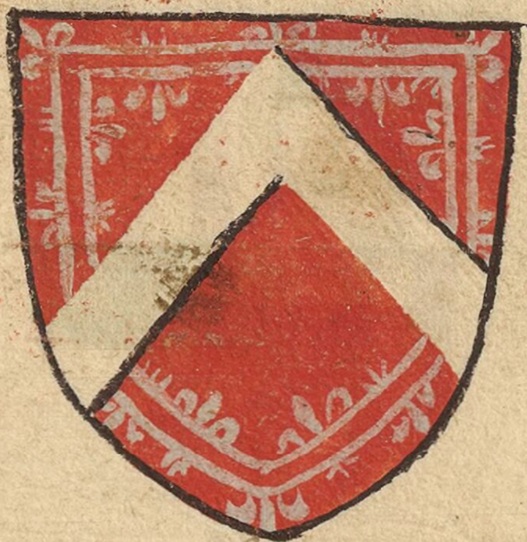 12th chief - Robert Fleming, 1st Lord Fleming
(c1405 - 1491)
Basic information about this person: \click here\
Robert Fleming saw his father beheaded after the Black Dinner of 1440, fought for years to win back the family estates, and was made a Lord of Parliament. In a long and turbulent life he was a royal official, a diplomat, a feuding baron and, at the end, a rebel against his king.
Restoring the family name
Robert was born around 1405, a younger son of Sir Malcolm Fleming of Biggar and Cumbernauld and Elizabeth Stewart. His elder brother Malcolm died shortly before their father, so when Sir Malcolm was executed on 28 November 1440 Robert became heir to estates that had been forfeited to the crown.
He fought back at once. On 7 January 1441, at the Cross of Linlithgow, he protested against the “illegal and unwarrantable” sentence passed on his father, and when the sheriff refused to accept his protest he took it to the Earl of Douglas, Justice-General, and sought jury trials over his father’s lands. When the young King James II came of age he was persuaded of the injustice, and on 1 January 1442 he ordered Robert to be served heir to a father who had “died at the faith and peace of his sovereign”. In 1443 Sir Alexander Livingston of Callendar swore on oath that he had given no counsel or consent to Malcolm’s death. Lenzie was restored to Robert in 1444, and in 1446 he regained Biggar.
A violent age
Restoration did not bring peace. In September 1445 Robert admitted burning the Earl of Angus’s corn and stealing his stock, and bound himself in two thousand merks to surrender at Tantallon or Hermitage Castle. In 1446 he interrupted a rival’s sasine of lands at Blance by throwing out the earth and stone of the ceremony. Robert’s nickname, “the Rebel”, was well earned.
Lord Fleming
Robert also rose high in royal service. In 1451 King James II made Biggar a free burgh of barony with a weekly market on Thursdays. By 1454 Robert was Master of the King’s Household and an auditor of the Exchequer, and in 1458 or 1459 he was created a Lord of Parliament as Lord Fleming of Cumbernauld. He sat regularly in Parliament, on the committee of the Lords of the Articles and as one of the Lords of Council, and in 1484 he was one of the ambassadors sent to France to renew the Auld Alliance.
In 1470 he exchanged Oliver Castle and the family’s other lands in Peeblesshire with the Hays of Yester for their share of Biggar and the patronage of Biggar church, so that the whole barony of Biggar was now his.
Feud with the Kennedys
From 1462 Robert was locked in a bitter dispute with Gilbert, Lord Kennedy, over Kirkintilloch and other lands in Lenzie that his ancestors had feued to the Kennedys. When the case was heard at Dumbarton in April 1466, Kennedy arrived with an army and Robert, outnumbered and intimidated, lost. Three months later, on 10 July 1466, Robert was one of the lords who seized the boy King James III at Linlithgow from Kennedy’s custody, and power passed to the Boyd family.
Debts and decline
In his later years Robert was constantly before Parliament over debts and disputed lands, and in 1480 he received a royal remission for raids on Lord Hamilton and other crimes. In September 1480 he resigned all his lands to King James III. In June 1488 he joined the rebels who fought against James III at Sauchieburn, where the king was killed. Around 1490 an action was raised to have him declared “furious, profuse” and incapable of managing his affairs. He died in 1491.
Family and legacy
Robert married first Janet Douglas, and secondly Margaret Lindsay. His children included Malcolm Fleming of Monycabock, his heir, Robert, David, Beatrix, Elizabeth and Janet. Malcolm died around 1477, so the title passed to Robert’s grandson John, 2nd Lord Fleming. For all his troubles Robert had rescued the family from ruin, consolidated Biggar and won the peerage that his descendants held for almost three centuries.